Watercolor Ermine Clipart: A Designer’s Review for Real-World Branding & Illustration Projects
First Impressions: Soft, Elegant, and Intrinsically Artistic
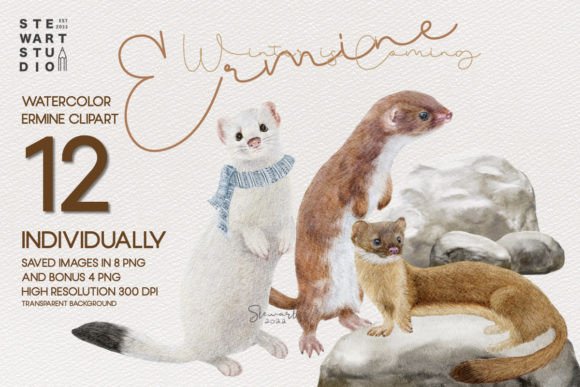
As a graphic designer working frequently with boutique brands and handmade product lines, the first thing I noticed about Watercolor Ermine Clipart is its delicate balance between realism and artistic flair. The ermine is rendered in a painterly watercolor style, with soft edges, translucent layers, and natural brush textures that evoke a sense of handcrafted authenticity. This isn’t just another digital illustration — it’s a visual statement.
The clipart has a quiet elegance, making it ideal for brands that want to communicate sophistication, tradition, or artisanal craftsmanship. It’s not bold or trendy; instead, it leans into timelessness, which is rare in today’s fast-paced design world.
Design Direction: Where Watercolor Ermine Clipart Fits Naturally
Imagine you’re designing packaging for a luxury soap brand or a seasonal candle line. The client wants something elegant, not overly modern, with a hint of European or vintage charm. Watercolor Ermine Clipart could serve as a subtle emblem — perhaps on a gift box lid, a label seal, or as part of a larger illustration set.
- Perfect for branding projects targeting niche luxury markets
- Works well in editorial design for lifestyle or heritage-themed publications
- Ideally suited for Etsy sellers focusing on vintage-inspired or nature-themed products
- Excellent for holiday cards, wedding invitations, and artisanal stationery
Performance Across Real-World Design Applications
This clipart isn’t just for printables. I tested it across a range of design scenarios and found it surprisingly versatile:
- Logo design – As a supporting icon in a minimalist logo system, it adds depth without overwhelming the typography.
- Packaging design – On matte-finish labels, the watercolor texture blends beautifully, giving a premium handmade feel.
- Social media graphics – Used as a decorative accent in Instagram posts or Pinterest pins, it adds visual warmth.
- Merchandise design – On mugs, tote bags, and greeting cards, especially when printed in high resolution, it maintains clarity and charm.
- Canva templates – Integrates smoothly with other design assets and adapts well to drag-and-drop platforms.
Where It Shines: Design Scenarios That Benefit Most
Watercolor Ermine Clipart truly excels in design contexts where mood and texture matter more than crisp minimalism. Here’s where I’d recommend using it:
- Themed collections – Especially for seasonal or limited-edition product lines.
- Packaging details – Adds a touch of refinement to box corners, seals, or wrap-around labels.
- Printable wall art – Works as a central motif or supporting element in botanical or wildlife-themed prints.
- Editorial design – Enhances spreads in lifestyle magazines, craft blogs, or artisanal recipe books.
- Commercial design assets – A strong addition to SVG design bundles or digital product kits for Etsy sellers.
Cautions: When to Use It Thoughtfully
Despite its beauty, this clipart isn’t a one-size-fits-all solution. Here are situations where I’d advise caution:
- Small sizes – The watercolor texture can get lost on tiny stickers or app icons.
- Crowded layouts – It may get visually buried in complex compositions with multiple illustrations.
- Low-contrast designs – Fades on backgrounds that don’t provide enough tonal separation.
- Minimalist branding – Clashes with ultra-clean brand identities that rely on geometric simplicity.
- Professional corporate materials – Too decorative for annual reports or formal business collateral.
Visual Impact: How It Affects Branding and Design Perception
From a visual hierarchy standpoint, Watercolor Ermine Clipart naturally draws the eye without shouting for attention. In branding, that’s a powerful trait. It supports emotional appeal and visual trust — two key elements for customer engagement, especially in small business branding and creative marketplaces.
When used consistently across packaging, social media, and print ads, this type of illustration helps build brand recognition. The organic, hand-painted style communicates authenticity, which is especially valuable for handmade businesses or eco-conscious brands.
Practical Designer Notes: What to Test Before Final Use
Before locking this into a client project, I always run a few checks to ensure it holds up professionally:
- Test in black and white – Does it still work if color is removed?
- Check contrast – Ensure visibility on both light and dark backgrounds.
- Preview at multiple sizes – Confirm clarity on large posters and small labels.
- Place on real mockups – See how it looks on fabric, paper, and packaging materials.
- Test print quality – Print on matte and glossy paper to assess texture reproduction.
- Review file formats – Make sure PNG and SVG files are included for both print and digital use.
- Inspect PNG transparency – Critical for overlaying on backgrounds or in Cricut projects.
- Confirm commercial licensing – Always verify usage rights, especially for print-on-demand sellers or digital product creators.
Typography Pairing: Finding the Right Visual Balance
Typography plays a big role in how Watercolor Ermine Clipart is perceived. Here’s what I found works best:
- Serif fonts – Enhance the classic, elegant tone of the illustration.
- Script fonts – Add a personal, hand-drawn feel that complements the watercolor style.
- Handwritten fonts – Perfect for craft-based brands or seasonal campaigns.
- Avoid overly modern sans serif or display fonts unless you’re aiming for contrast.
Balance is key. Don’t let the illustration compete with the text — instead, let them work together to create a cohesive visual story.
Final Thoughts: A Valuable Addition to Your Creative Design Toolkit
Watercolor Ermine Clipart is more than just an illustration — it’s a storytelling tool. Whether you’re designing a new product line for a local boutique or crafting a visual identity for a heritage-inspired brand, this design asset brings a level of sophistication and warmth that’s hard to replicate with vector graphics or digital art alone.
For designers, marketers, and small business owners looking to elevate their visual content with a touch of artistry, this clipart is worth serious consideration — especially when used thoughtfully within the right design context.